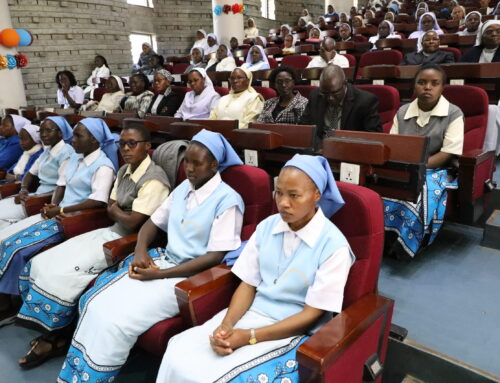
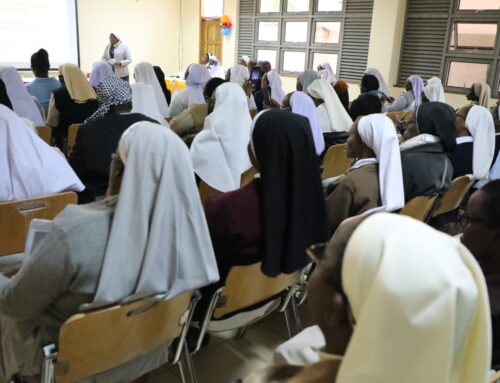
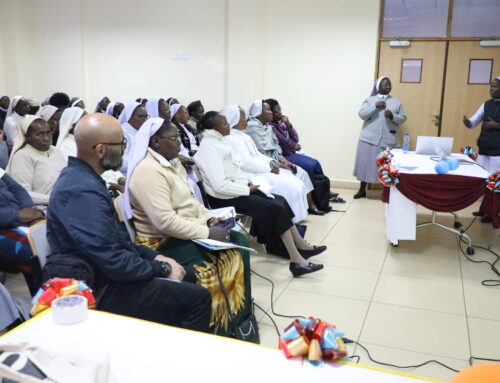
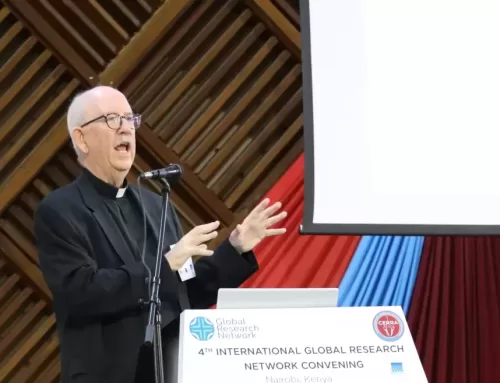
Rev. Msgr. Luciano Labanca, Chargé ď Affaires – Apostolic Nunciature in Kenya invited the participants of the 4th Global International Research Network Symposium that was held at the University of Eastern Africa from 10th to 12th June 2025 to always begin where authentic Christian Journey begins: in God. “Unless the Lord builds the house, those who build it labour in vain” (Psalm 127:1). It is, therefore, both wise and spiritually fitting to begin this symposium with prayer—acknowledging that all our efforts find meaning and fruitfulness only when rooted in God”.
He reminded them that prayer is not a pause before work but a foundation of it. “As we embark on this journey of reflection, research, and renewal”, he said, “we must remember to do everything without grumbling or arguing, embracing unity, joy, and service”. Drawing lines between Scriptures and Consecrated life, between faith and witness, between calling and mission. He proposed three movements of reflection: “the faithfulness of God, the responsibility of witness, and the mission to be salt and light in the world”.
According to Msgr. Labanca, consecrated life is humanity’s Amen to that yes, a response of gratitude and surrender. “In Christ, God has said a total and irrevocable ‘yes’ to our humanity.” This “yes”, he explained, is not theoretical but incarnate—it took flesh in the life of Christ and is echoed in every consecrated life, which becomes a living “Amen” to God’s faithfulness. The vocation to consecrated life, he emphasized, is a radical and grateful response to the initiative of divine love
Msgr. Labanca did not shy away from addressing the challenges of contemporary consecrated life. He reminded his audience that consecration is not immunity from life’s struggles, but a deeper immersion into them. Citing St. Paul’s Letter to the Philippians, he called religious to hold in tension grace and responsibility, emphasizing that holiness is not an ornament of religious life but its core.

He also situated consecrated life within the synodal dynamic of the Church, describing it as a co-responsibility between divine initiative and human cooperation. In doing so, he cautioned against relying solely on degrees, structures, or strategies. Rather, he called for deep spiritual rootedness, ongoing conversion, and genuine fraternity, which alone can sustain the transformative impact of religious life in society.
Reflecting on the Gospel of Matthew, Msgr. Labanca evoked the familiar but powerful images of salt and light. He reminded the assembly that salt purifies and preserves, while light reveals and guides—not for show, but for service. In a world plagued by corruption, injustice, violence, and despair, consecrated persons are called to be discreet yet essential signs of God’s enduring presence and love.
With pastoral warmth, he painted the image of a single sister in a remote, underserved area as a lit candle in a dark room—a small presence with immeasurable impact. “You are called,” he said, “to illuminate the darkest places of society: conflicts, trafficking, domestic violence, inequality.”
Key Insights